






At almost every paediatric check-up, a child gets weighed, measured, and assigned a BMI percentile. If the number sits within the normal range, the conversation moves on. If it crosses the 95th percentile, a flag goes up.
This system is not wrong. But it is incomplete — and the gap between what BMI measures and what it misses has real consequences for how metabolic risk is identified in children, particularly in India.
BMI Was Never Designed for This
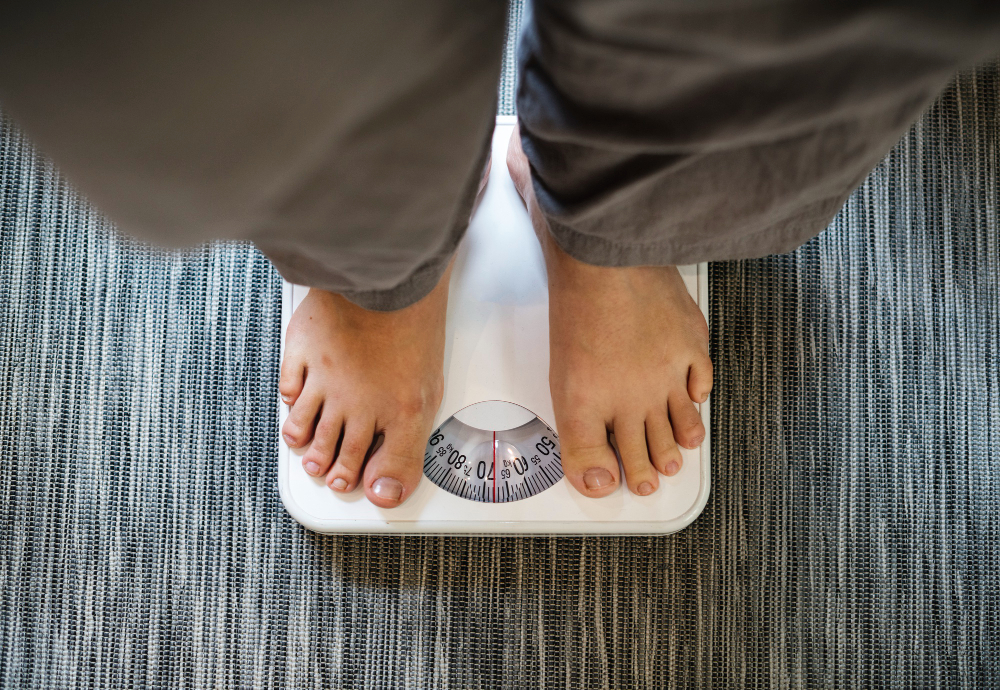
BMI is a straightforward calculation: weight in kilograms divided by height in metres squared. It was developed in the 19th century by a Belgian statistician studying population-level weight patterns. When Ancel Keys formalized its modern use in 1972, he was explicit that BMI was designed for population studies — not for evaluating individual patients.
That distinction matters more than most people realise.
BMI tells you about weight relative to height. It does not tell you what that weight is made of. A child with a high proportion of body fat and low muscle mass can have a normal BMI. A child with a high BMI because of above-average lean muscle mass — physically active, well-nourished — can be flagged unnecessarily. BMI cannot tell the difference between these two children. Their weight-to-height ratio may be identical. Their metabolic risk profiles are not.
This has been a known limitation for decades. What is newer is the evidence of how large the misclassification problem actually is in clinical practice.
What the Research Shows: Misclassification in Both Directions
A 2023 study published in Cardiovascular Diabetology measured children’s actual body fat using dual-energy X-ray absorptiometry — the most accurate method available for measuring body composition in clinical settings. Researchers then compared those measurements to what BMI-based classification would have concluded.
The results confirmed the concern. A significant proportion of children with elevated body fat and elevated cardiometabolic risk were cleared by BMI because their weight-to-height ratio fell within the normal range. Separately, children with high BMI but high lean mass — not excess fat — were incorrectly flagged. The misclassification ran in both directions.
The deeper problem is fat distribution. BMI says nothing about where fat is stored in the body. Central adiposity — fat accumulated around the abdomen and surrounding internal organs — is the fat pattern most strongly associated with insulin resistance, high blood pressure, abnormal cholesterol, and metabolic syndrome. A child can carry significant visceral fat and still register a completely normal BMI. The screening tool is blind to the characteristic that matters most for metabolic risk.
Why This Is a More Urgent Problem in India

For Indian children specifically, the limitations of BMI are not just a statistical inconvenience. They represent a clinically meaningful gap in how risk is being detected.
South Asian populations — including Indians — have a well-documented body composition pattern that differs from the Western populations on which BMI norms were largely developed. At the same BMI as a European child, an Indian child tends to carry more body fat, with more of it concentrated in the abdomen, and less skeletal muscle mass. This is not simply a dietary or lifestyle difference. It reflects a genetically and developmentally distinct pattern of fat storage that has been documented across multiple studies.
The pattern begins from birth. Indian newborns have lower average birth weight than European newborns but higher body fat percentage — particularly around the abdomen. Researchers call this the “thin-fat Indian baby” paradox. This early tendency toward central fat accumulation, combined with lower muscle mass, persists through childhood and adolescence. It is associated with higher rates of insulin resistance and metabolic syndrome at adiposity levels that would be considered low-risk in European reference populations.
The clinical implication is direct. Research assessing Indian girls using WHO BMI classifications found that two out of three girls with body fat exceeding 30% — a level associated with excess adiposity — were not classified as obese. Their BMI readings fell within the normal range. The risk was present. The screening tool did not detect it.
This means that in the Indian paediatric context, relying on BMI alone does not just miss some cases — it systematically misses a majority of high-risk cases in a population already predisposed to central fat accumulation.
The Alternatives: Promising, But Not a Clean Solution
Waist-to-height ratio has attracted the most research attention as a supplement or alternative to BMI. The principle is practical: keeping waist circumference below half of total height — a ratio below 0.5 — has been proposed as a simple, universally applicable indicator of elevated cardiometabolic risk.
In adults, waist-to-height ratio consistently outperforms BMI for predicting cardiovascular disease, type 2 diabetes, and metabolic syndrome across multiple populations and ethnic groups. The case for its use in adults is reasonably strong.
In children, the evidence is more complicated — and this is where the honest turn in the research matters.
A 2023 BMC Medicine study involving 24,605 children across ten countries found that the 0.5 threshold is not universally optimal in paediatric populations. For Asian and South Asian children specifically, a lower cut-off of approximately 0.46 may better predict cardiometabolic risk — reflecting the same body composition differences that make standard BMI percentile charts problematic in this group. A single universal threshold does not work equally across all ethnic groups in children.
More fundamentally, head-to-head comparisons of waist-to-height ratio, waist circumference, and BMI in children and adolescents have found that the three measures perform similarly when predicting clustered cardiometabolic risk factors. None substantially outperforms the others across all outcomes. Waist-to-height ratio has practical advantages — it does not require age- and sex-specific reference tables, and the concept of keeping waist circumference below half of height is easy to communicate. But it is not a definitive replacement.
The 2023 American Academy of Pediatrics clinical practice guidelines reflect this evidence honestly. BMI is retained as the primary screening tool — not because it is ideal, but because no single alternative has demonstrated clear superiority across all paediatric populations. The guidelines explicitly state that elevated BMI must be confirmed as representing excess adiposity, and recommend that fat distribution and comorbidity burden be assessed alongside BMI as part of a complete evaluation.
In other words: BMI remains the starting point. But the starting point is not the complete picture.
What This Means in Practice

When a child’s BMI falls within the normal range but other signs raise concern — abdominal prominence, family history of diabetes or heart disease, early signs of insulin resistance, fatigue, or abnormal lipid results — waist circumference should be measured and assessed relative to height. A waist-to-height ratio approaching or exceeding 0.5, or 0.46 in South Asian children, warrants further metabolic evaluation regardless of BMI percentile.
When a child’s BMI is elevated, the clinical question should not stop at the number. Is the elevation due to fat mass, lean mass, or both? Where is the fat distributed? Are there early metabolic indicators — blood pressure, fasting glucose, insulin levels, lipid profile — that suggest systemic risk is already accumulating?
These are not complex investigations. They are the additional steps that translate a population-level screening tool into an individual clinical assessment — which is precisely what BMI, by design, was never meant to be.
The Bottom Line
BMI has a legitimate role in paediatric screening. It is practical, reproducible, and correlates reasonably with adiposity at the population level. The problem is not the tool — it is the assumption that the tool alone is sufficient for identifying metabolic risk in individual children, particularly in populations where the relationship between weight, fat distribution, and disease risk differs from the norms the tool was built on.
For Indian children, that gap is not a theoretical concern. It is a documented clinical reality — one that is likely causing metabolic risk to go undetected in a significant proportion of children who would be flagged by more complete assessment.
The measurement that reassures is not always the measurement that informs.
📚 References:
Freedman et al. Pediatrics, 2024.
Zapata et al. Cardiovasc Diabetol, 2023.
Zong et al. BMC Med, 2023.
Sweatt et al. Curr Obes Rep, 2024.
Hampl et al. Pediatrics, 2023.
For assessment of childhood metabolic health, weight management, and related concerns, SDDM Hospital’s Paediatrics and Diabetology departments are available at +91-191-2464637 or sddm.hospital.
This article is for general educational purposes and does not constitute medical advice. Please consult a qualified healthcare professional for individualized assessment.
SDDM Hospital, Jammu Multi-Specialty Care | Paediatrics | Diabetology | Internal Medicine 📍 Channi Himmat, Jammu | 📞 +91-191-2464637 | 🌐 sddm.hospital
If you have a child health concern, consult our Pediatrics department at SDDM Hospital, Jammu.
