





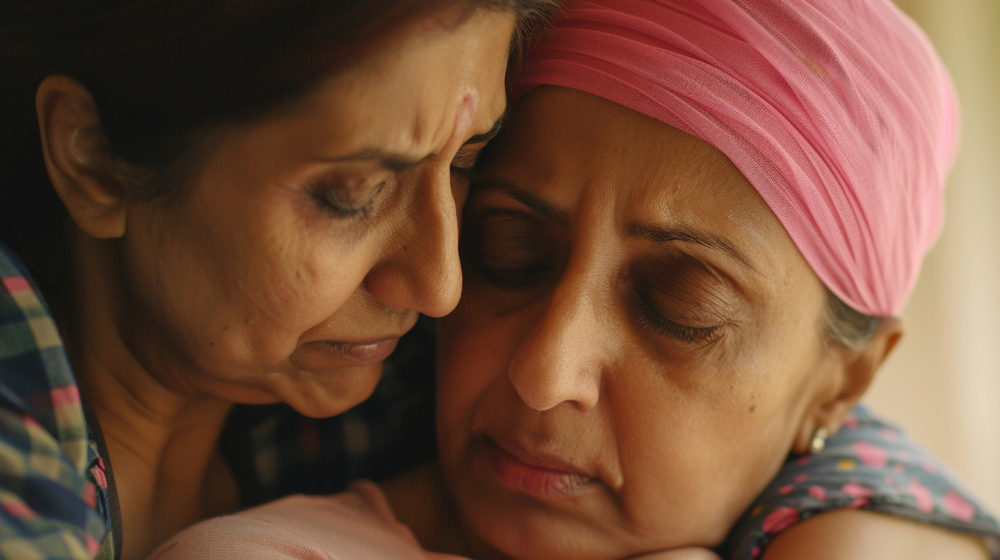
Two out of every three people living with Alzheimer’s disease are women. Most people don’t know that.
The usual explanation is that women live longer. And that’s true — age is the single biggest risk factor for dementia, so a longer life does increase the odds. But scientists studying this question have started noticing something that doesn’t quite add up. Even after accounting for age and life expectancy, women still appear to face a higher risk than men. The longevity explanation doesn’t close the gap entirely.
Let’s dive in.
It Might Start in the Brain, During Perimenopause
Estrogen is best known as a reproductive hormone. But it does a great deal more than that — especially in the brain.
Estrogen helps protect neurons from damage, reduces the kind of inflammation that’s linked to cognitive decline, maintains healthy blood flow to brain tissue, and plays a role in clearing out the abnormal protein buildup associated with Alzheimer’s disease. Think of it as part of the brain’s housekeeping system — keeping things running, reducing wear and tear, clearing out what shouldn’t be there.
The problem is that estrogen levels don’t stay constant throughout a woman’s life. During perimenopause — the transitional years before menopause, which can begin as early as the early forties — estrogen starts to fall. This isn’t just a reproductive event. Brain imaging studies have shown that this hormonal shift triggers measurable changes in how the brain uses energy, how much inflammation is present, and how well certain memory-related regions function.
Researchers have begun calling the perimenopausal brain a “window of vulnerability” — a period when the sudden withdrawal of estrogen’s protective influence coincides with the earliest stages of age-related neurodegeneration. This is not menopause causing dementia. It is menopause potentially removing a layer of protection at exactly the wrong time.
A large analysis published in 2023 reviewed over 50 studies involving more than 6 million women. It found that women who used estrogen-based hormone therapy in midlife — within roughly ten years of menopause — had a noticeably lower rate of dementia compared to women who did not. Researchers now refer to this as the “critical window hypothesis.”
But the Science Isn’t Settled — And That Matters
Here’s the honest part, because it’s important.
In 2025, a rigorous review published in The Lancet Healthy Longevity examined over a million women across multiple studies and reached a careful conclusion: based on current evidence, it is not possible to confirm whether hormone therapy raises, lowers, or has no effect on dementia risk. The WHO offers no guidance on this question. The critical window hypothesis, while biologically compelling, has not been validated in randomised controlled trials designed to test it.
That doesn’t mean the question is wrong. It means the answer isn’t ready yet.
The difficulty is partly scientific. Running a trial that follows women from their early forties through to their seventies and eighties — tracking whether hormone therapy affected dementia risk decades later — is extraordinarily hard. Most studies done so far enrolled older women, already well past the proposed window, which makes the results difficult to interpret. The Women’s Health Initiative Memory Study, the most widely cited trial in this area, enrolled women aged 65 to 79. That may simply have been too late.
The honest position: we don’t yet know whether hormone therapy can protect against dementia. But the question is being taken more seriously now than it has been in years — and the research is catching up.
The Genetics Angle Nobody Talks About
There is another piece of the puzzle that rarely makes it into everyday health conversations: genetics.
One gene in particular — APOE ε4 — significantly raises the risk of developing Alzheimer’s disease. Roughly one in four people carry at least one copy of it. But here’s what most people don’t know: the APOE ε4 gene appears to affect women more than men. Women who carry this gene variant seem to face a steeper increase in Alzheimer’s risk than male carriers of the same variant.
Why? Researchers believe estrogen may have been partially compensating for this genetic vulnerability — and that when estrogen withdraws at menopause, that buffer disappears. This doesn’t mean carrying APOE ε4 is a death sentence. It means knowing your family history, and discussing genetic risk with your doctor, is more relevant for women than many people realise.
The Risk Factors That Are Already Within Reach

While the hormone story is still being written, there is solid, consistent evidence on several factors that raise dementia risk — and many of them fall disproportionately on women.
Depression. Women face roughly twice the rate of depression as men across their lifetimes. What most people don’t realise is that depression is a recognised risk factor for Alzheimer’s disease — not just a mental health issue in isolation. There’s growing evidence that untreated depression over long periods causes changes in the brain that can increase vulnerability to neurodegeneration. Getting it treated properly, early, matters far more than most people appreciate.
Education and staying mentally active. Research has consistently shown that education — and ongoing mental engagement throughout life — builds what scientists call “cognitive reserve.” Think of it as the brain developing extra pathways that can compensate when some begin to deteriorate. Historically, women in many parts of the world have had less access to formal education than men. That gap is narrowing, but its legacy in older generations is visible in the data. Staying mentally engaged — through reading, learning, problem-solving, social interaction — continues to build that reserve throughout life.
Chronic stress and caregiving. Women are significantly more likely to serve as the primary caregiver for children, ageing parents, and spouses — sometimes all at once. This isn’t a lifestyle choice for most; it’s a structural reality. The problem is that sustained, chronic stress has measurable effects on the brain: it raises cortisol levels, promotes inflammation, and disrupts the hormonal systems that regulate brain health. This is not about stress management as self-care. It is about recognising caregiving as a genuine health risk factor that deserves medical attention.
Cardiovascular health. This one is frequently underestimated. High blood pressure in midlife is one of the clearest modifiable risk factors for dementia later in life. Women’s cardiovascular risk often goes underdiagnosed because symptoms can present differently than in men, and because the postmenopausal shift in cardiovascular risk isn’t always discussed proactively. Managing blood pressure, maintaining a healthy weight, staying physically active, and not smoking all have documented effects on brain health — not just heart health.
None of these are guarantees. Dementia is complex, and no single change eliminates the risk. But the 2024 Lancet Commission on dementia prevention — the most comprehensive global report on this subject — estimated that a substantial proportion of dementia cases worldwide are linked to modifiable factors. Many of those factors fall squarely on the map of women’s health.
What to Actually Do With This
If you are a woman in your forties or fifties, or if you have a mother, sister, or partner navigating perimenopause, there are specific, practical things worth raising with a doctor.
Ask about blood pressure — not just whether it’s “normal,” but whether it’s optimal for long-term brain health. Ask about hormonal health during the perimenopausal transition and what, if any, monitoring is appropriate for you specifically. If you have a family history of Alzheimer’s, ask about APOE genetic counselling. If you are experiencing persistent low mood, get it treated — not just managed.
Stay physically active in a way that gets your heart rate up. Keep reading, learning, staying socially connected. These are not small things dressed up as advice. They are the areas where the evidence currently points most clearly.
The research on dementia and women is moving faster than it ever has. The picture is not complete. But the places where it is already clear are worth acting on — and acting on early.
That’s not nothing. It’s actually where it has to start.
📚 References:
Livingston et al. Dementia prevention, intervention, and care: 2024 report. The Lancet, 2024.
Gong et al. Sex differences in dementia risk: 21-cohort analysis. Alzheimer’s & Dementia, 2023.
Nerattini et al. Menopause hormone therapy and Alzheimer’s disease risk: systematic review. Frontiers in Aging Neuroscience, 2023.
Melville et al. MHT and risk of MCI or dementia: umbrella review. The Lancet Healthy Longevity, 2025.
O’Neal MA. Women and the risk of Alzheimer’s disease. Frontiers in Global Women’s Health, 2024.
Do you have questions about women’s health, hormonal changes, or preventive care? SDDM Hospital’s Gynaecology and Internal Medicine teams are here to help. Call us at +91-191-2464637 or visit sddm.hospital to book a consultation.
SDDM Hospital, Jammu Multi-Specialty Care | Gynaecology & Women’s Health | Internal Medicine | Neurology 📍 Channi Himmat, Jammu | 📞 +91-191-2464637 | 🌐 sddm.hospital
