




Breast cancer screening is a simple idea: look for the disease before it causes symptoms. In Kashmir it matters more than most people realise, because breast cancer is now the most common cancer in women in the valley.
This article explains when to start, who may need to start earlier, and which changes should send you to a doctor straight away, whatever your age.
Breast Cancer Screening: Why It Matters Here
An audit of 22,188 cancers at SKIMS and other Kashmir centres between 2014 and 2018 found that breast cancer had become the most common cancer in women, at about 13.5% of all female cancers. The average age at diagnosis was 45. This was one regional audit, not a full cancer registry, but the direction is clear.
We have no Kashmir figures on how advanced the cancer is when it is found. Elsewhere in India, one hospital study in Nagpur found that about six in ten women (145 of 229) arrived with advanced disease. Finding breast cancer earlier is exactly what screening aims to do.
What Breast Cancer Screening Means
Screening means testing women who have no symptoms. For the breast, the usual test is a mammogram, which is a low-dose X-ray of each breast. It can show changes that are too small to feel.
However, ultrasound and a doctor’s breast examination are not recommended on their own as screening tests in the Indian imaging guideline. Mammography is the test of choice.
When to Start Breast Cancer Screening
The Breast Imaging Society of India recommends that women at average risk start mammograms at 40 and have one every year until about 70. After 70, the decision depends on your health.
Guidelines elsewhere differ. The US Preventive Services Task Force (2024) advises a mammogram every two years from 40 to 74. WHO describes screening as mammography for women usually aged 50 to 69.
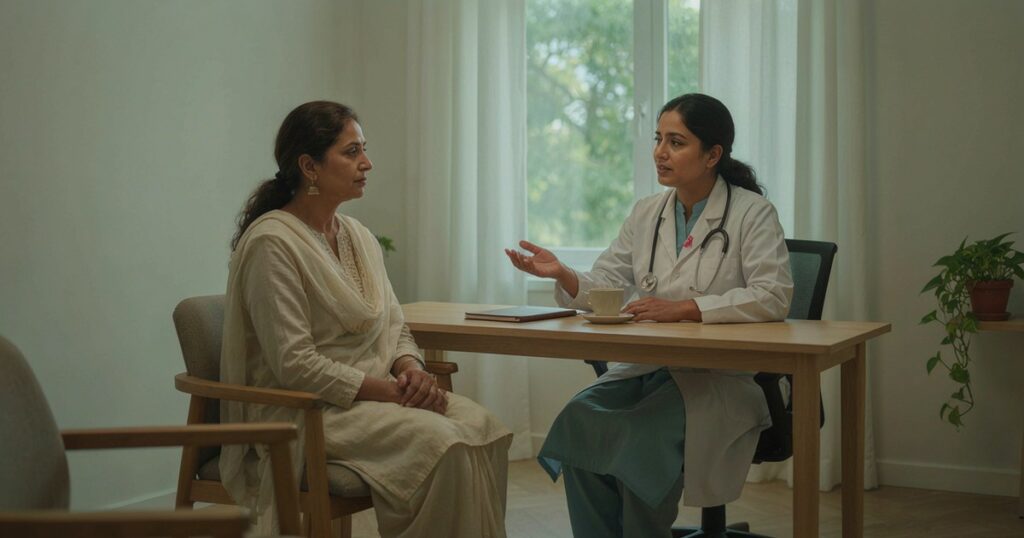
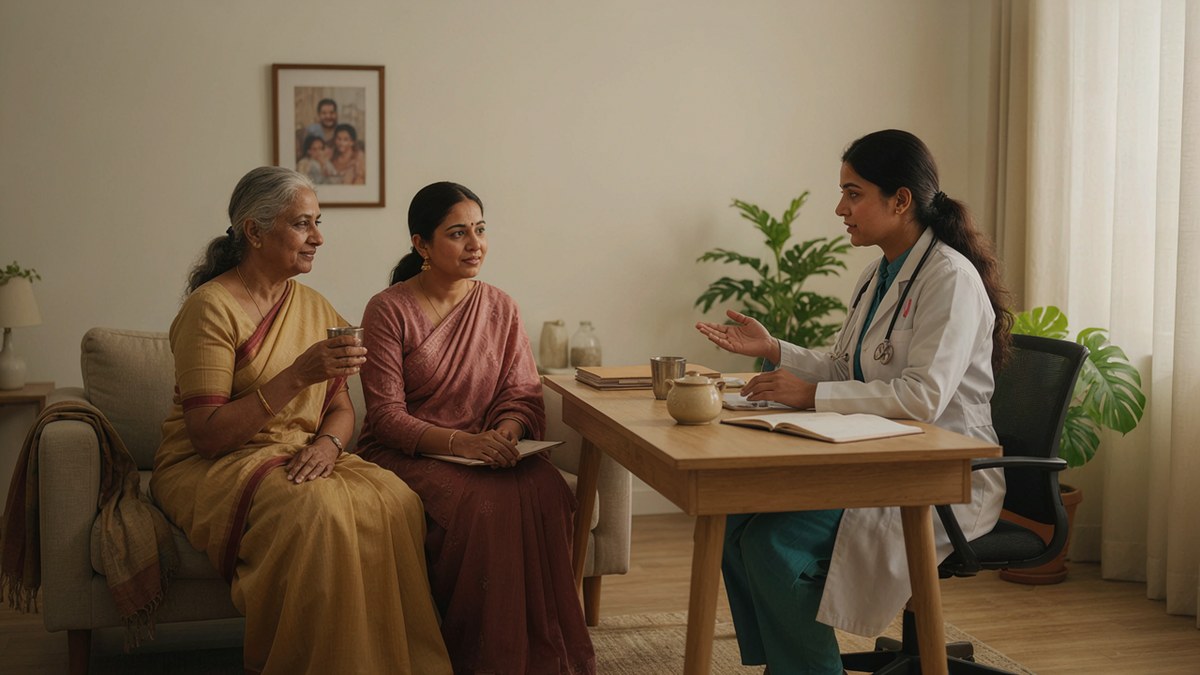
So there is no single agreed answer on the starting age or how often. That is why a conversation with your doctor at 40 is worth having. Your doctor can weigh your own risk, and decide what suits you.
Higher Risk? You May Need to Start Earlier
Some women need screening sooner, and often with an MRI as well. The Indian guideline lists:
- A known BRCA1 or BRCA2 gene change
- A close relative (mother, sister or daughter) diagnosed with breast cancer before menopause
- Radiation to the chest between the ages of 10 and 30
For these women, screening may begin around 30. Your doctor will set the age and the tests. Mammograms are not started before 25 in any case.
Dense Breasts and Extra Tests
Some mammogram reports mention “dense” breasts. Dense tissue can hide small changes. In that case, an ultrasound may be added to the mammogram. Ask your radiologist or doctor whether you need it.
Breast Cancer Screening Does Not Replace Checking a Change
Screening is for women with no symptoms. If you notice a change, don’t wait for your next mammogram or the “right” age. See a doctor. WHO lists these signs:
- A lump or thickened area, often painless
- A change in the size, shape or look of the breast
- Dimpling, redness or other skin changes
- A change in the nipple or the skin around it
- Fluid from the nipple, especially if it is bloody
Many breast changes turn out to be harmless, but only an examination can tell. WHO also notes that small lumps that have not spread to nearby lymph nodes are more likely to be treated successfully, even a lump that does not hurt.
The guidelines we reviewed focus on mammography, not a formal monthly self-exam. So the aim is simply to know what is normal for you, which makes a change easier to spot.
What a Mammogram Visit Involves
Each breast is pressed briefly between two plates so the X-ray picture is clear. It can be uncomfortable, but it is quick. Tell the technician if you have breast implants, or if you might be pregnant.
The Bottom Line
Breast cancer screening can find cancer earlier. However, it cannot prevent it, and no test is perfect. Talk to your doctor at 40, or earlier if you have a strong family history. At any age, see a doctor about a new breast change.
📚 References:
Best Practice Guidelines for Breast Imaging, Breast Imaging Society India (Part 1). Annals of the National Academy of Medical Sciences (India), 2022. Read online
Changing trends of common cancers in the Kashmir valley (SKIMS regional cancer centre audit, 2014–2018). Indian Journal of Medical and Paediatric Oncology, 2021;42(5):439–443. Read online
World Health Organization. Breast cancer fact sheet. Read online
US Preventive Services Task Force. Breast cancer screening recommendation, 2024. Read online
Pawar et al. Complementary and alternative medicine use and delayed presentation of breast cancer in Indian women. Indian Journal of Medical and Paediatric Oncology, 2024. Read online
SDDM Hospital, Channi Himmat, Jammu Multi-Specialty Care 📍 Channi Himmat, Jammu | 📞 +91-191-2464637 | 🌐 sddm.hospital
Not sure when to start, or worried about a change? The Gynaecology team at SDDM Hospital®, Jammu can talk you through it. Call +91-191-2464637 or find a doctor on our website.
