

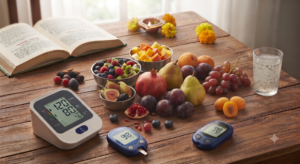
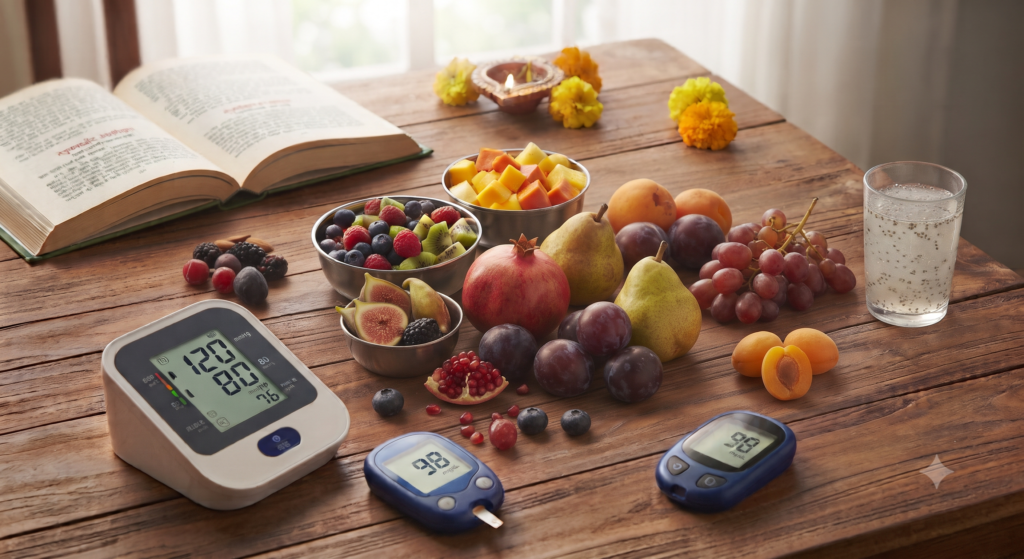
Navratri begins on 11 October, and for many families that means nine days of fasting. If you live with diabetes or high blood pressure, you may be wondering whether you can still take part. The honest answer is that Navratri fasting with diabetes or high BP is possible for many people, but it works best with a plan and a conversation with your doctor, not as something you work out on day one.
Navratri Fasting with Diabetes: Is It Safe?
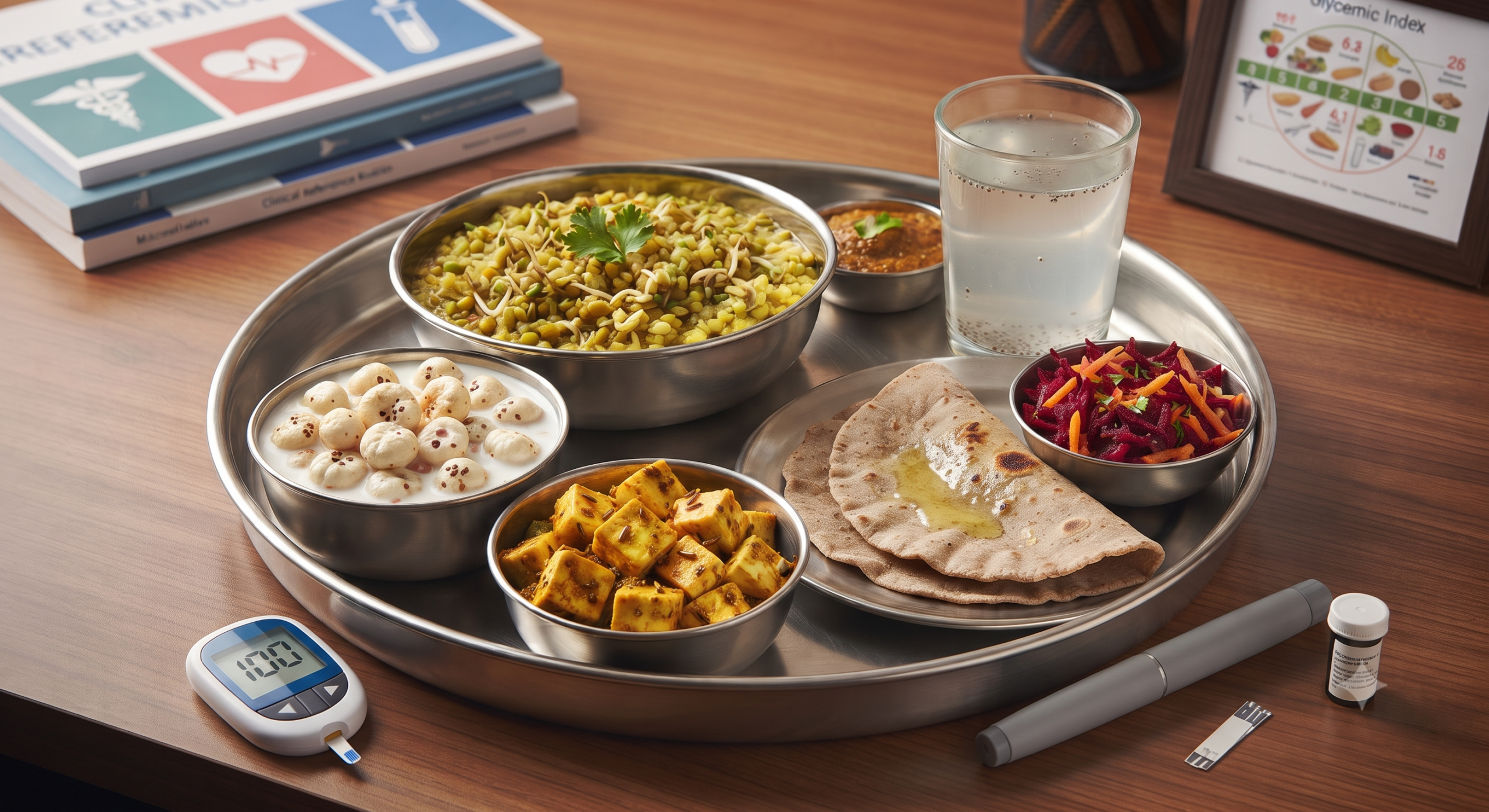
Fasting itself is not the main problem. The trouble usually comes from how the fast is done.
A study of 300 people with type 2 diabetes at clinics in North India found that about half had observed a fast in the past year, and Navratri was among the most common. Of those who fasted, around 6 in 10 had missed their diabetes medicines, and only 4 in 100 had checked their blood sugar at home. During Navratri, more than half of those surveyed ate sweets, and nearly half ate fried food.
Here is why that matters. If you eat less but take the same medicines, your sugar can drop too low. If you fill the gaps with sabudana, potato, fried snacks and sweets, your sugar can climb too high. Both can happen in the same day.
For blood pressure, the usual issues are different: not drinking enough, and a lot of salty fried snacks.
Who Should Speak to a Doctor First?
Everyone with diabetes or high blood pressure should, ideally before the first day. With Navratri only a few days away, this week is the time.
Please do not fast without specific medical advice if you:
- Have type 1 diabetes, or use insulin
- Have had a serious low-sugar episode recently, or often don’t feel low sugar coming on
- Have kidney disease or a heart condition
- Have blood pressure that has been hard to control
- Are pregnant or breastfeeding
- Are older and have several health conditions
Also mention it if you take a water tablet (diuretic), or a diabetes tablet from the “gliflozin” family such as dapagliflozin or empagliflozin. These can cause problems when you eat and drink less.
Three questions to ask:
- Is it safe for me to fast this year, and in what way?
- Do my medicine timings or doses need to change?
- What sugar or BP readings mean I should stop?
Never skip or change a medicine on your own. Some diabetes medicines, including insulin and tablets such as glimepiride, can push sugar too low when you eat less. Your doctor can adjust the timing safely.
Navratri Fasting with Diabetes: What to Eat and What to Go Easy On
The goal is simple: don’t go too long without food, and don’t let starch and sugar do all the work.
Eat small, regular meals. Every 3 to 4 hours works better than one big meal after a long gap.
Build meals around protein and fibre. These keep you full and steady your sugar:
- Curd, paneer, milk and plain buttermilk
- Makhana (roasted, not fried)
- A small handful of nuts
- Lauki, pumpkin, cucumber and other vrat-friendly vegetables
Treat vrat flours with care. Kuttu, singhara and rajgira are fine in sensible portions, but they are still starch. A roti is a better choice than a puri, and roasted is better than fried.
Go easy on:
- Sabudana khichdi and vada, which are mostly starch and can lift sugar quickly
- Potato dishes, especially fried ones
- Pakoras, chips and other deep-fried snacks
- Sweets, and sweetened or packaged drinks
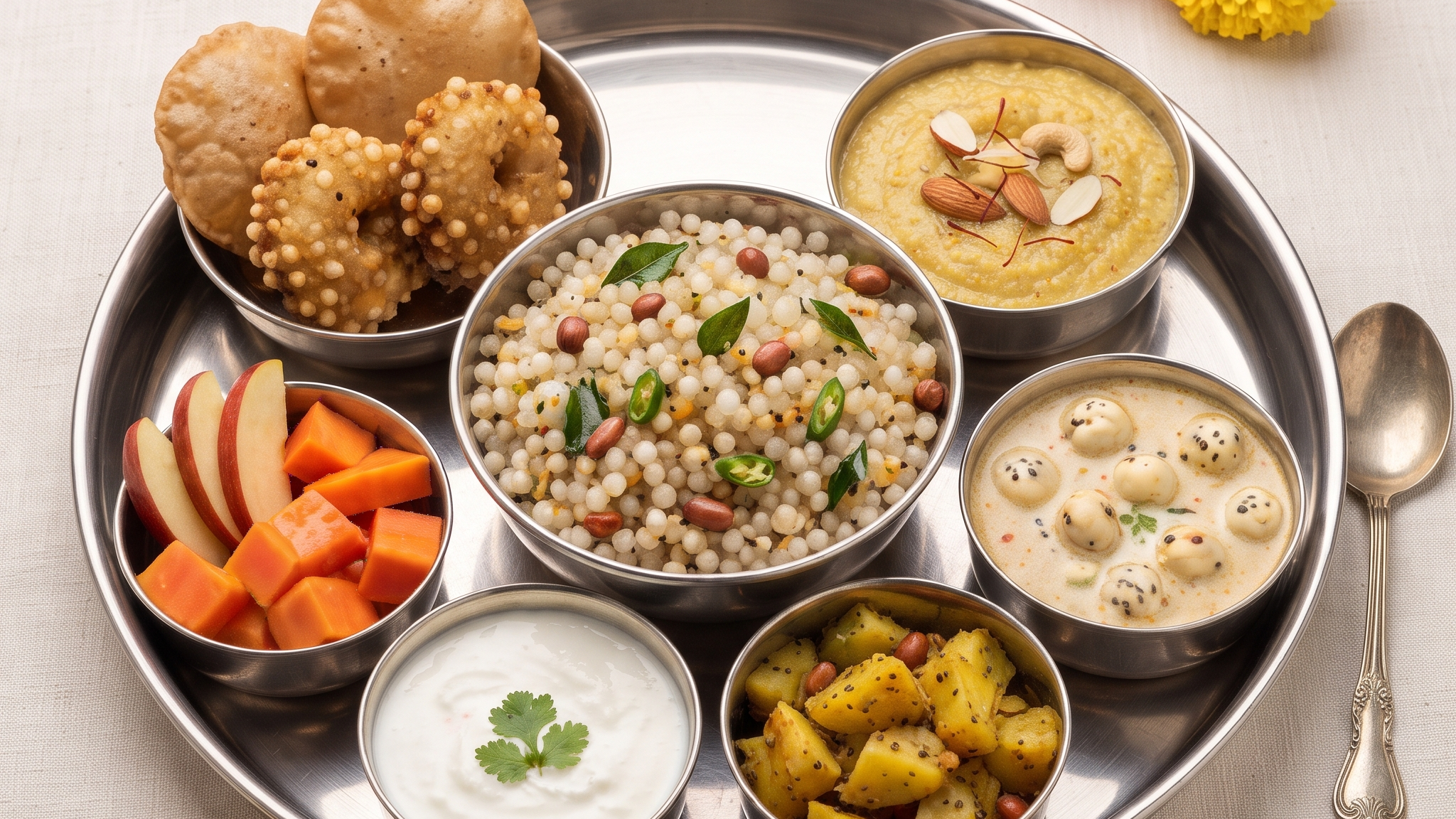
Choose whole fruit over fruit juice, in portions your doctor is comfortable with, and pair it with a few nuts or some curd.
Drink enough. Water, unsweetened lemon water and plain buttermilk through the day.
When you break the fast, start with protein and vegetables before the starch. Avoid making up for the day with a large meal or extra sweets.
Navratri Fasting with Diabetes and High BP: Four Things to Watch
1. Keep taking your medicines. For most people, they continue during a fast. Your doctor may change the timing.
2. Drink enough fluids. Dehydration can make you dizzy, especially if you take a water tablet. Stand up slowly.
3. Remember that rock salt is still salt. Sendha namak is sodium chloride, the same as table salt, and it has no proven advantage for blood pressure. The WHO suggests keeping total salt under 5 grams a day, about one teaspoon. Salted makhana, chips, papad and namkeen add up quickly.
4. Check your BP if you can. If you have a home monitor, check at the same time each day.
Stop fasting and get checked if you feel faint, have chest pain, severe breathlessness, a racing heartbeat or a sudden severe headache. If it is chest pain or you can’t catch your breath, call 108 straight away.
Navratri Fasting with Diabetes: When to Break the Fast
ThYour health matters more than finishing the fast. Break it if you notice:
Signs of low sugar: shakiness, sweating, sudden hunger, a pounding heart, blurred vision, confusion or irritability. If you have a meter and the reading is below 70 mg/dL, or you feel like this whatever the reading, treat it right away. Take about a tablespoon of sugar or honey in water, or half a glass of fruit juice, or glucose tablets. Check again after 15 minutes and then eat a proper snack. If someone becomes very drowsy or confused and can’t swallow safely, call 108.
Signs of high sugar: very high thirst, passing urine often, a reading above 300 mg/dL, or nausea, vomiting or stomach pain. Break the fast and contact your doctor.
The 70 and 300 mg/dL numbers are the standard cut-offs in international guidance on fasting with diabetes. Your doctor may set different ones for you, so ask.
A special note for gliflozin users. These medicines can occasionally cause a serious acid build-up in the blood even when sugar looks normal. If you feel sick, vomit, have stomach pain, breathe fast or feel unusually tired, get medical help.
A Warning About Kuttu Flour
Every Navratri brings reports of people falling ill after eating kuttu atta. In October 2024, more than 100 people in Uttar Pradesh developed vomiting, diarrhoea and dizziness after eating food made from buckwheat flour. Similar episodes have been reported in other years, including in Delhi.
A few simple habits lower the risk:
If you feel unwell after eating it, seek medical care and keep the packet
Buy sealed, labelled flour from a reliable shop and check the date
Avoid loose or open flour, and flour that smells musty or sour
Store it in a dry, airtight container and buy small quantities
The Bottom Line
Fasting during Navratri matters deeply to many families, and Navratri fasting with diabetes or high blood pressure can be done safely for many people. What makes the difference is preparation: a talk with your doctor, small regular meals, enough fluids, and knowing when to stop.
If your doctor advises against a full fast, a modified fast with simple, vrat-friendly food and regular meals is an option you can discuss together. A fast that keeps you well lets you enjoy all nine days.
📚 References:
Management of Diabetes during Fasting and Feasting in India. Journal of the Association of Physicians of India, 2019; 67 (September).
Khandelwal D, et al. Dietary Practices During Common Religious Fasts in People with Type 2 Diabetes Mellitus Among Different Religions in North India: A Questionnaire-based Study. touchREVIEWS in Endocrinology, 2020; 16(1).
IDF-DAR risk categories and guidance on fasting with type 2 diabetes. Journal of Diabetes Nursing, 28(1).
Effects of Ramadan fasting on blood pressure in hypertensive patients: a systematic review.
Euglycemic diabetic ketoacidosis induced by sodium-glucose cotransporter 2 inhibitor in the setting of prolonged fasting: a case report. Journal of Medical Case Reports, 2022.
WHO. Salt reduction fact sheet (recommended intake under 5 g salt per day).
Business Standard. Several fall ill in UP after consuming kuttu atta, 4 October 2024.
IDF / DAR International Alliance. Guide to safe fasting for people with diabetes (patient guide), 2024.
American Diabetes Association. Hypoglycemia: levels and treatment (15-gram rule), 2025.
SDDM Hospital, Jammu Multi-Specialty Care 📍 Channi Himmat, Jammu | 📞 +91-191-2464637 | 🌐 sddm.hospital
If you or a family member has diabetes or high blood pressure and plans to fast this Navratri, consult our Diabetology and Internal Medicine specialists at SDDM Hospital®, Jammu.
This article is for general educational purposes and does not constitute medical advice. Please consult a qualified healthcare professional for individualised assessment and guidance.
