





A patient comes in tired. Not the kind of tired a good night’s sleep fixes — persistent, weeks-long fatigue, accompanied by irritability, trouble concentrating, maybe some memory lapses that feel unfamiliar. The reflexive explanation, both from the patient and often from the clinician, is stress. If thyroid function has been checked before and come back normal, the conversation frequently stops there.
In a significant number of cases in India, the actual explanation is vitamin B12 deficiency — a condition common enough to be described in recent literature as a genuine epidemic, yet routinely missed because its symptoms overlap so completely with conditions clinicians already have on their radar.
How Common Is This, Really?

The scale of B12 deficiency in India is larger than most people, including many healthcare providers, realise. A comprehensive review of Indian studies conducted between 2000 and 2019 found deficiency prevalence reaching 78.5% among healthy adults and 61.7% among the elderly population.
What makes this particularly relevant for a broad audience is that it is not confined to vegetarians, though the risk is elevated there. A cross-sectional study conducted at a medical college in Mumbai screened 102 healthy young adults and found that 73.5% overall were B12 deficient — 78% of vegetarians, but also 59.3% of non-vegetarians. Vitamin B12 is found almost exclusively in animal-derived foods, which explains the elevated vegetarian risk, but deficiency in meat-eaters points to additional factors: inadequate intake even within a non-vegetarian diet, absorption problems, or increased requirements that dietary intake alone doesn’t meet.
This is not a rare or unusual finding buried in a single obscure study. It is a consistent pattern across multiple Indian research groups, in different cities, using different populations.
Why B12 Deficiency Is Called “The Great Mimic”
Vitamin B12 plays a critical role in two very different body systems, and this dual role is exactly why its deficiency produces such a confusing clinical picture.
First, B12 is essential for red blood cell production in the bone marrow. Deficiency causes red blood cells to become abnormally large and fragile — a condition called macrocytic anaemia — reducing the blood’s oxygen-carrying capacity. This produces fatigue, weakness, breathlessness, and pallor. These symptoms overlap almost completely with iron-deficiency anaemia, one of the most common conditions in Indian women, which frequently leads to B12 deficiency being overlooked once iron deficiency is identified or assumed.
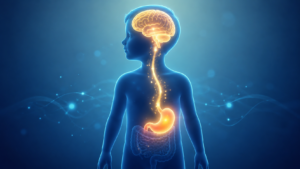
Second, and less widely appreciated, B12 is essential for the maintenance of the nervous system — both the peripheral nerves and the central nervous system, including brain function. Deficiency here produces an entirely different symptom cluster: memory lapses, difficulty concentrating, irritability, low mood, and in more advanced cases, tingling or numbness in the hands and feet.
What makes B12 deficiency genuinely difficult to catch is that the neuropsychiatric symptoms frequently appear before the haematological ones. A person can have significant, clinically meaningful B12 deficiency affecting mood and cognition while their blood count remains entirely normal. By the time anaemia develops — the sign most clinicians are trained to associate with B12 deficiency — the deficiency has often been present, and affecting the nervous system, for considerably longer.
A recently documented case illustrates this pattern clearly: a young adult presenting with memory lapses and irritability, initially attributed to work-related stress, was found on further inquiry to follow a strict vegetarian diet. Active B12 testing revealed a severely deficient level of 10 pmol/L against a normal threshold above 70. Following B12 replacement therapy, the patient’s mood, concentration, and memory improved over the following weeks and months.
Why Standard Testing Can Miss It
This is the part of the story that deserves far more attention than it currently gets, because it directly affects whether deficiency gets diagnosed at all.
The standard test ordered when B12 deficiency is suspected is total serum vitamin B12. This measures all forms of B12 circulating in the blood — including forms bound to proteins that are biologically inactive and never actually delivered to the body’s cells. Only a fraction of total circulating B12, bound to a specific transport protein called transcobalamin, is in the biologically active form that cells can actually use. This active fraction is measured by a separate test: holotranscobalamin, commonly called active B12 or holo-TC.
The clinical consequence of relying on total B12 alone is significant. A comparative study evaluating both markers in the same patient population found that using total B12 as the diagnostic criterion classified 59% of participants as deficient. Using holotranscobalamin — the biologically meaningful marker — only 28.8% were classified as deficient in that same group. This is not a minor discrepancy. It means total B12 testing can substantially overestimate or, more concerningly for a symptomatic patient, provide false reassurance through a “normal” result while genuine functional deficiency at the cellular level goes undetected.
Research comparing diagnostic accuracy across multiple B12-related markers has consistently found that holotranscobalamin outperforms total B12 for detecting deficiency, with methylmalonic acid — another functional marker that rises when B12 is genuinely insufficient at the cellular level — also performing better than total B12 alone.
The practical implication: a patient with genuinely disruptive symptoms — fatigue, memory changes, mood disturbance — who receives a “normal” total B12 result has not necessarily been cleared of B12 deficiency. The test itself may not be sensitive enough to detect a real, symptomatic deficiency.
The Overlap With Other Common Indian Conditions
B12 deficiency’s symptom profile intersects with several other conditions that are themselves extremely common in India, creating multiple opportunities for misdiagnosis or missed diagnosis.
Hypothyroidism, highly prevalent among Indian women, produces fatigue as a hallmark symptom. When a patient presents with fatigue and thyroid function tests are checked and found abnormal, or even when they’re normal and hypothyroidism is assumed based on symptoms alone, B12 status frequently goes unchecked. A patient may be started on thyroid medication when B12 deficiency is the primary or a co-existing driver of their symptoms.
Iron-deficiency anaemia, similarly common, particularly in Indian women, produces fatigue, weakness, and pallor that overlap significantly with B12-deficiency anaemia. Both conditions can coexist, and treating one without checking for the other leaves symptoms only partially addressed.
Elevated homocysteine, a consequence of B12 deficiency, is also an independent risk factor for cardiovascular disease and stroke — meaning untreated B12 deficiency carries downstream cardiovascular implications that extend well beyond fatigue and mood.
What This Means Practically

If fatigue, mood changes, memory difficulties, or tingling sensations persist despite normal thyroid function and normal iron studies, B12 status is worth specifically investigating — and worth investigating properly, not with total B12 alone if the clinical suspicion remains high despite a normal result.
For vegetarians specifically, periodic B12 screening is a reasonable proactive measure given the consistently high deficiency rates documented across Indian studies, rather than waiting for symptoms to prompt testing. For non-vegetarians, the assumption that dietary meat consumption rules out deficiency is not supported by the evidence — nearly 6 in 10 non-vegetarians in the Mumbai study were also found deficient.
When B12 deficiency is confirmed, treatment — typically intramuscular injections initially, followed by maintenance therapy — is straightforward and highly effective. The documented case of symptom improvement over weeks to months following treatment is a consistent pattern, not an isolated result.
The Bottom Line
Vitamin B12 deficiency is far more common in India than its clinical profile suggests, affecting a majority of adults in some studied populations, vegetarians and non-vegetarians alike. Its symptoms mimic stress, thyroid dysfunction, and iron-deficiency anaemia so closely that it frequently goes uninvestigated — and even when it is investigated, the standard test may not reliably detect it.
Persistent fatigue, mood change, or cognitive symptoms that don’t fully resolve with treatment for a more obvious diagnosis deserve a second look at B12 status — ideally including the active B12 marker, not total B12 alone.
The deficiency is common. Catching it reliably requires knowing that the standard test has limits.
📚 References:
Malik R, Trilok-Kumar G. Vitamin B12 deficiency in the Indian population — a review of studies from 2000 to 2019.
Vitamin B12 and Non-vegetarianism: Myth versus Reality. Cross-sectional study, Mumbai Medical College, 2018.
Dastidar R, Sikder K. Diagnostic reliability of serum active B12 (holo-transcobalamin) in true evaluation of vitamin B12 deficiency. BMC Research Notes, 2022.
Bondu JD, Nellickal AJ, Jeyaseelan L, et al. Assessing Diagnostic Accuracy of Serum Holotranscobalamin (Active-B12) in Comparison with Other Markers of Vitamin B12 Deficiency. Indian Journal of Clinical Biochemistry, 2020.
Vitamin B12 deficiency in northern India tertiary care: Prevalence, risk factors and clinical characteristics. PubMed Central, 2022.
Campos AJ, Risch L, Nydegger U, et al. Diagnostic Accuracy of Holotranscobalamin, Vitamin B12, Methylmalonic Acid, and Homocysteine in Detecting B12 Deficiency. Disease Markers, 2020.
For assessment of fatigue, mood changes, or suspected vitamin B12 deficiency, SDDM Hospital’s Internal Medicine and Neurology departments are available at +91-191-2464637 or sddm.hospital.
This article is for general educational purposes and does not constitute medical advice. Please consult a qualified healthcare professional for individualised assessment and guidance.
SDDM Hospital, Jammu Multi-Specialty Care | Internal Medicine | Neurology 📍 Channi Himmat, Jammu | 📞 +91-191-2464637 | 🌐 sddm.hospital
If you have persistent fatigue, mood changes, or unexplained neurological symptoms, consult our Internal Medicine or Neurology specialist at SDDM Hospital, Jammu.
