




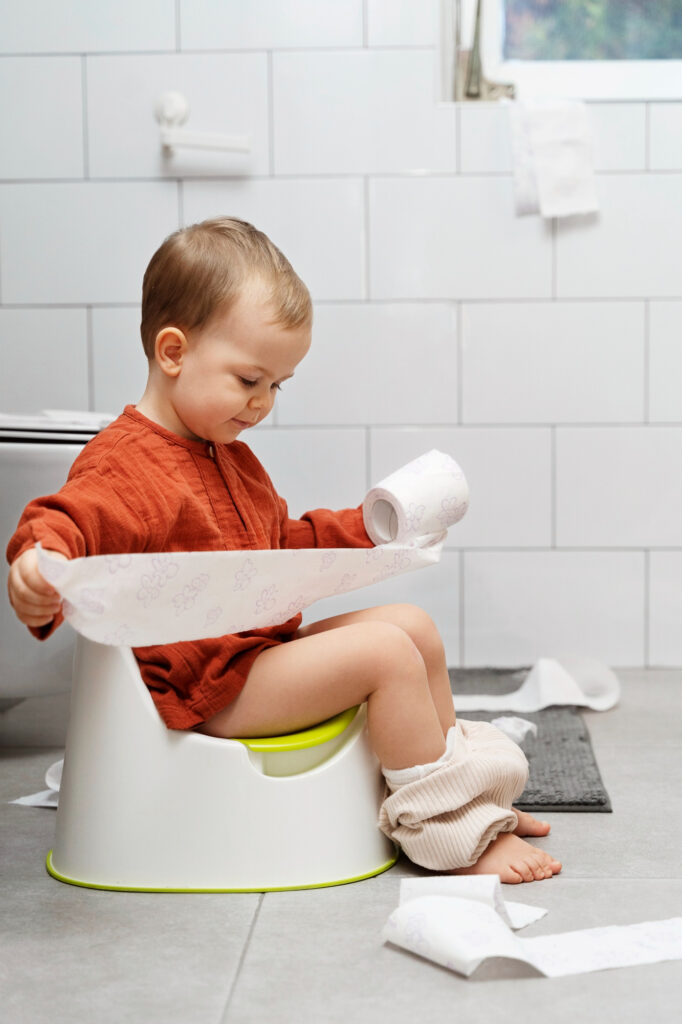
A child clenches, crosses their legs, hides behind the sofa, or suddenly becomes intensely interested in a toy the moment they feel the urge to go. Parents often read this as stubbornness, a phase, or a discipline problem. In the overwhelming majority of child constipation causes, it’s none of those things. It’s a child’s body doing exactly what it learned to do after one bad experience — and the cycle that follows is one of the most common, and most misunderstood, conditions in pediatric medicine.
How Common Are Child Constipation Causes?
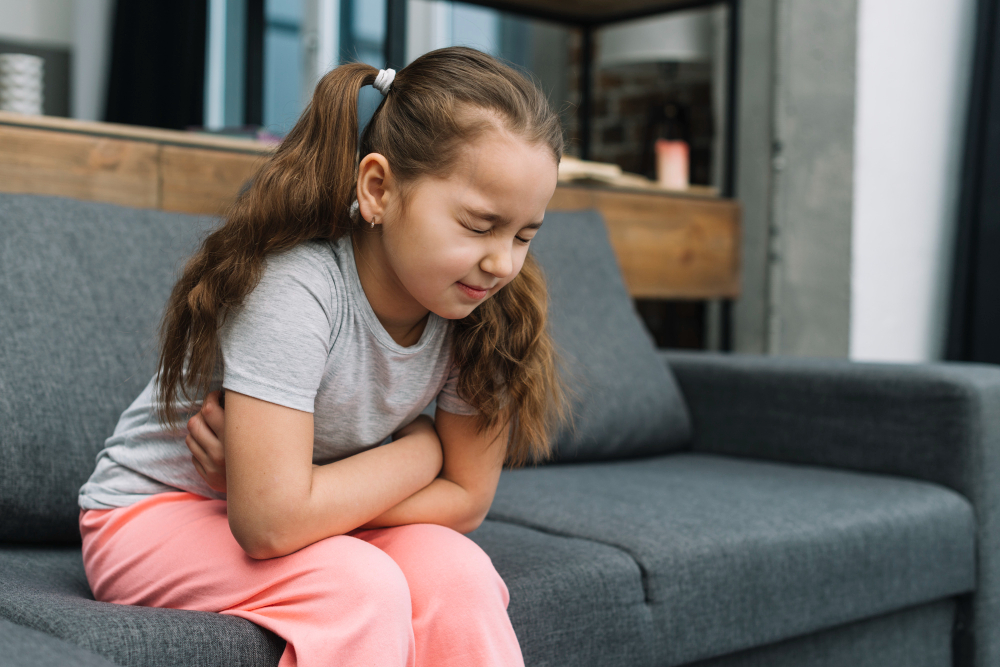
Functional constipation in children is common enough that most parents will encounter it at some point. Global pooled prevalence estimates sit around 9.5% to 14.4%, though figures vary widely by region — from under 1% to nearly 30% in some Asian population studies, reflecting differences in diagnostic criteria and local recognition of the condition.
The word “functional” matters here. It means the constipation is not caused by any anatomical abnormality, disease, or structural problem. In up to 95% of children diagnosed with constipation, no underlying organic cause is found at all. This is the single most important thing for parents to understand: in the vast majority of cases, nothing is structurally wrong with the child’s body. The problem is behavioural, with a clear, well-documented mechanism.
The Cycle: How One Bad Experience Becomes a Pattern
Understanding functional constipation requires understanding the cycle that creates and sustains it, because this cycle is the actual target of effective treatment — not diet alone.
It typically begins with a single episode: a hard, painful bowel movement, sometimes triggered by a period of mild dehydration, a change in diet, an illness, or simply normal variation in stool consistency. That one painful experience is often enough. The child, consciously or not, begins to associate the urge to defecate with pain, and starts actively avoiding it.
This avoidance takes a recognisable physical form — clenching the buttocks, crossing the legs, standing on tiptoe, rocking, or suddenly becoming very still and distracted. Parents frequently misread these behaviours as the child straining to go, when in fact the child is doing the opposite: actively holding stool in.
Here is where the cycle becomes self-reinforcing. The longer stool remains in the colon, the more water the colon continues to absorb from it, making the stool progressively harder and larger. When the child eventually does pass this stool — whether voluntarily or because the pressure becomes unavoidable — the experience is even more painful than the first time. This reinforces the original fear, and the withholding behaviour intensifies for the next episode. Left unaddressed, this cycle can continue for months or years, with the interval between bowel movements gradually lengthening and the associated distress growing.
Why Diet Alone Frequently Doesn’t Work
Dietary advice — more fibre, more water, more fruit — is almost always the first thing offered when addressing child constipation causes, and it isn’t wrong as general advice. But once the fear-withholding cycle is established, dietary changes alone frequently fail to resolve it, because diet was never the primary driver. A child actively, deliberately withholding stool out of fear will continue to do so regardless of how much fibre is in their diet — treating only stool consistency leaves the actual mechanism untouched.
The Overflow Soiling That Looks Like Something Else Entirely
One of the most confusing and distressing aspects of functional constipation for families is a symptom called fecal incontinence, or overflow soiling. A 2025 hospital-based study in Nepal, examining 241 children diagnosed with functional constipation, found stool-withholding behaviour in over 40% of cases and fecal incontinence in 16%.
Overflow soiling happens when a large, hard mass of retained stool sits in the rectum, and looser stool from higher up the digestive tract leaks around it, appearing in the child’s underwear as what looks like diarrhoea or a behavioural “accident.” Parents, understandably, often read this as the opposite of constipation — assuming loose stools or a bowel control problem, when the underlying cause is actually severe stool retention. This misreading can delay proper diagnosis considerably, as families and even some clinicians pursue explanations related to diarrhoea or behavioural regression rather than recognising it as a hallmark sign of significant constipation.
School: The Setting Nobody Thinks to Ask About

A factor that rarely comes up in conversations about childhood constipation is where children actually withhold stool most often outside the home: at school.
A recent study conducted in the Netherlands, surveying 1,000 school-aged children, found that just over half of primary school children and more than 70% of high school students reported withholding stool specifically while at school. The most commonly cited reasons were toilet cleanliness and a lack of privacy. This is not a phenomenon unique to one country — reluctance to use school toilets due to embarrassment, lack of privacy, unpleasant conditions, or simply not having enough time between classes is a widely reported driver of withholding behaviour in children globally.
For a family trying to understand why a child’s constipation isn’t improving despite dietary changes at home, this is often the missing piece. A child who is comfortable using the toilet at home but consistently avoids doing so at school is, in effect, withholding for a significant portion of every weekday — more than enough to sustain the cycle regardless of what happens with meals.
The Treatment Mistake That Undoes Successful Care
This is the part of the picture that deserves the most attention, because it directly affects whether treatment for child constipation causes actually works long-term.
Indian Society of Pediatric Gastroenterology, Hepatology and Nutrition consensus guidelines state plainly that management of childhood functional constipation in India remains far from satisfactory, noting a scarcity of comprehensive local guidance and persistent gaps in how the condition is treated in practice.
The single most frequently cited cause of relapse after a child has successfully recovered is early withdrawal of laxative therapy — stopping medication as soon as stools become regular and painless, often out of a well-intentioned but misplaced concern about creating long-term dependency on laxatives. Current clinical guidelines are explicit on this point: maintenance laxative therapy, typically with osmotic agents such as polyethylene glycol, should continue for a prolonged period — often months, sometimes over a year — with gradual tapering only after the child has shown sustained improvement, not immediate discontinuation the moment symptoms resolve.
Stopping too early allows the underlying withholding pattern, which takes considerably longer to unlearn than the stool takes to normalise, to reassert itself. The colon that was stretched and desensitised by prolonged retention needs sustained time on adequate laxative support to regain normal function and sensation — not just a few weeks of softer stools before medication is withdrawn.
What Actually Helps
Effective management combines several elements, not any single intervention alone. Disimpaction — clearing existing hard, retained stool, typically with an appropriately dosed osmotic laxative — comes first if significant retention is present. This is followed by sustained maintenance laxative therapy at a dose sufficient to keep stools consistently soft and pain-free, continued for months rather than weeks.
Alongside medication, addressing the behavioural cycle matters just as much: reassuring the child that bowel movements will not hurt going forward, establishing a relaxed, unhurried toilet routine without pressure or punishment, and where school avoidance is a factor, working on practical strategies around timing and specific toilet concerns.
Dietary modification remains a reasonable, supportive part of the plan — one component alongside medication and behavioural support, not the primary or sole treatment for an established withholding cycle.
The Bottom Line
A child who resists using the toilet is very often not being defiant. They are responding, in a completely understandable way, to a painful experience their body is trying to avoid repeating. Recognising functional constipation as a specific, well-documented behavioural-physiological cycle — rather than a diet problem or a discipline issue — is the first step toward breaking it.
The second step, and the one most commonly missed, is staying the course with treatment for child constipation causes long enough for the cycle to actually be unlearned, rather than stopping as soon as things start to look better.
The child is not refusing to go. The body has learned, painfully, to avoid it — and unlearning that takes longer than most families expect.
📚 References:
Aryal N, Thapa M, Kunwar BRB, et al. Sociodemographic and Clinical Characteristics of Functional Constipation in Children Receiving Care at a Tertiary Hospital. Journal of the Nepal Medical Association, 2025.
Allen P, Setya A, Lawrence VN. Pediatric Functional Constipation. StatPearls, NCBI Bookshelf, 2024.
Stool Withholding at School Among Children in the Netherlands. PubMed, 2026.
Indian Society of Pediatric Gastroenterology, Hepatology and Nutrition, Pediatric Gastroenterology Chapter of Indian Academy of Pediatrics. Management of Childhood Functional Constipation: Consensus Practice Guidelines. Indian Pediatrics, 2018.
The Ten “Hard” Questions in Pediatric Functional Constipation. Italian Journal of Pediatrics, 2024.
For evaluation and management of constipation or bowel concerns in children, SDDM Hospital’s Paediatrics department is available at +91-191-2464637 or sddm.hospital.
This article is for general educational purposes and does not constitute medical advice. Please consult a qualified healthcare professional for individualised assessment and guidance.
SDDM Hospital, Jammu Multi-Specialty Care | Paediatrics 📍 Channi Himmat, Jammu | 📞 +91-191-2464637 | 🌐 sddm.hospital
If your child has recurrent, unexplained constipation or bowel concerns, consult our Pediatrics specialist at SDDM Hospital, Jammu.
