




Stroke warning signs can be easy to miss, and every minute matters. A stroke happens when blood flow to part of the brain is blocked or a blood vessel bursts. It is a medical emergency, and the sooner treatment starts, the better the chance of recovery.
This article explains the signs to look for, what to do straight away, and why even a short episode needs urgent care.
Stroke Warning Signs: Why They Matter
India had more than 1.25 million new strokes in 2021, up from about 650,000 in 1990, according to a Lancet Neurology analysis reported in the media. We have no figures for Jammu and Kashmir, but the national trend is clear.
Treatment works best when it starts early. Yet in one hospital study in South India, almost three in four stroke patients (154 of 210) arrived four and a half hours or later. Many had waited to see whether the symptoms would pass.
The Main Stroke Warning Signs: FAST
The Indian Stroke Association uses the word FAST:
- F is for Face. One side of the face droops or feels numb. Ask the person to smile.
- A is for Arm. One arm is weak or will not rise. Ask them to lift both arms.
- S is for Speech. Speech is slurred, confused or hard to understand.
- T is for Time. Note when it started, and act at once.
Other sudden signs can also point to a stroke. These include sudden loss of balance, sudden trouble seeing, or confusion. Often there is no pain, which is one reason people wait.
What to Do Straight Away
If you see any of these signs, even if they seem mild:
- Call 108 for an ambulance. If you cannot get one quickly, take the person to the nearest emergency department.
- Note the time the signs began. Doctors need it to choose treatment.
- Stay with the person until help arrives.
Don’t wait to see if it passes, and don’t wait for morning, even if it starts at night. A clinic visit first can cost precious time, so go straight to emergency care.
Why Time Matters
For the most common type of stroke, caused by a clot, the clot-busting drug is given within about four and a half hours of the start of symptoms. Some patients may also have a clot removed within about six hours. Not every patient qualifies, and a scan is needed first.
So hospitals count the time from the first sign. That is why noting it matters, and why a short delay at home can limit the treatment options.
A Warning Stroke (TIA) Is Still an Emergency
Sometimes the signs appear and then fade within minutes or hours. This is called a transient ischemic attack (TIA), or “warning stroke”. According to the American Stroke Association, symptoms usually last a few minutes, but can last up to 24 hours.
However, it is not a false alarm. After a TIA, the risk of a stroke is nearly ten times higher than for someone of the same age and sex who has never had one. You cannot tell a TIA from a stroke yourself. So get emergency care even if you feel fine again.
Who Is at Higher Risk?
WHO names high blood pressure and tobacco use as the most significant risks you can change. Atrial fibrillation (an irregular heartbeat), heart failure, a past heart attack and a previous stroke also raise the risk.
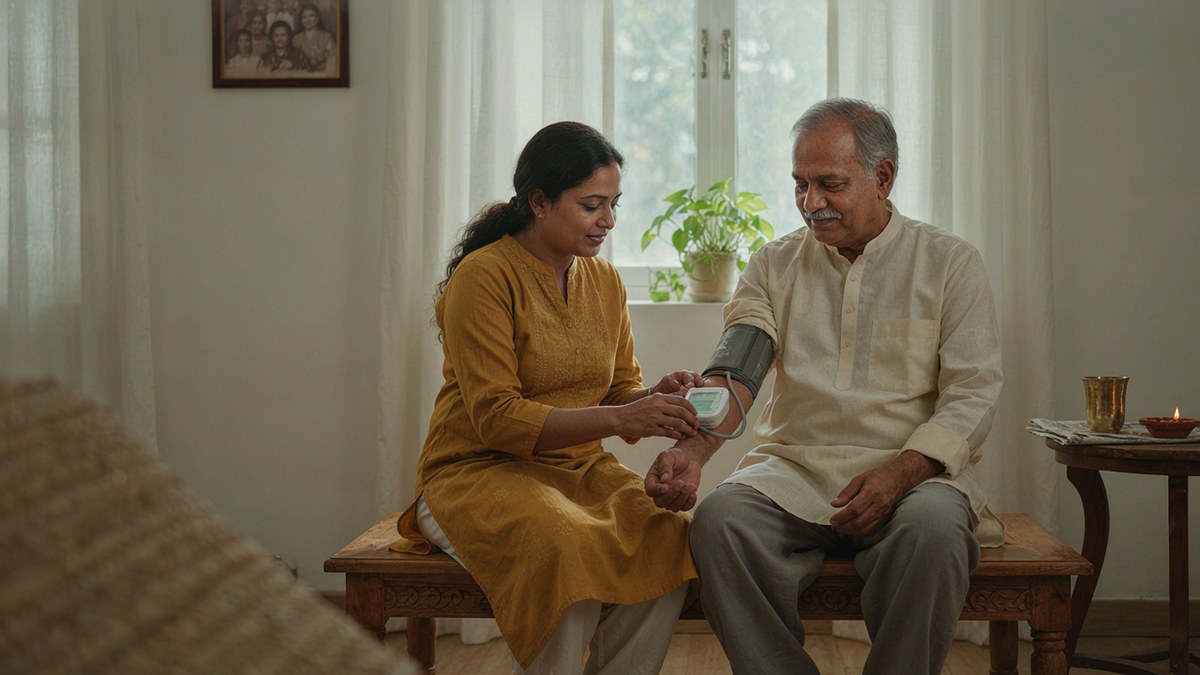
If you have high blood pressure, check it regularly and take treatment as your doctor advises. If you smoke or chew tobacco, ask your doctor for help to stop.
The Bottom Line
Learn FAST: face, arm, speech, time. If you see a sign, call 108 and note the time. Even if the symptoms clear, get checked. Quick action gives the best chance of recovery.
📚 References:
Down To Earth. India faces a 51% rise in stroke cases over 30 years (reporting a Lancet Neurology global burden analysis), 20 September 2024. Read online
Revathi S, Kavitha MS, Shankar V. Factors associated with prehospital delay in patients with acute stroke in South India. Indian Journal of Community Medicine, 2023;48(1):82–90. Read online
Indian Stroke Association. Recommendations for the early management of acute ischemic stroke: consensus statement. Read online
American Stroke Association. Let’s Talk About Transient Ischemic Attack (TIA). Read online
WHO Eastern Mediterranean Region. Stroke, cerebrovascular accident. Read online
SDDM Hospital, Channi Himmat, Jammu Multi-Specialty Care 📍 Channi Himmat, Jammu | 📞 +91-191-2464637 | 🌐 sddm.hospital
In an emergency, call 108 or go to the nearest emergency department. The Emergency team at SDDM Hospital®, Jammu is available 24/7 on +91-191-4542325. For checks on blood pressure and heart health, find a doctor or visit our Neurology department page.
